Thursday, 11 December 2025

Beyond the Infinite Two Minutes (5 Stars)


My brain hurts.

So the guys in a cafe find a way to communicate with themselves in the future. Right?

Their future selves tell them where they can find money hidden on a scrap heap. So they rush out to get it.

But how did their future selves know where the money was? They knew because they'd been told where it was in the past.

My brain hurts.

Order from Amazon.co.uk
Order from Amazon.de

Wednesday, 10 December 2025

Barb Wire (5 Stars)


Barb Wire is often dismissed as a relic of 90's comic-book excess, yet it works surprisingly well as a pulpy celebration of girl power. Pamela Anderson's Barb stands at the centre of the chaos with a kind of swagger that leaves every man in the film looking slow, confused or hopelessly outmatched. The plot may swim in dystopian tropes, yet the film's energy comes from watching Barb outthink and outfight a line of men who underestimate her every step of the way.

Barb runs her nightclub, negotiates with corrupt officials and takes on mercenaries without waiting for help from anyone. The men around her posture and threaten, yet Barb treats them like minor obstacles. The film sets up a world in which men try to impose rules while Barb survives by ignoring those rules and doing things her own way. Every time a man tries to dominate the scene she shuts him down with either a sharp remark or a well-aimed shot. She never loses control.

The romance subplot exists only to underline her independence. Her former lover Axel believes he understands her, yet she consistently proves she does not need rescue or guidance. Their shared history matters only because it gives her another chance to demonstrate that she sees through the emotional games that slow everyone else down. Instead of melting into nostalgia she keeps her priorities clear and shows that strength can be both emotional and physical.

The action sequences reinforce this theme. Barb moves with confidence while her opponents stumble. The film delights in showing her as the most competent person in any room. Whether she is trading blows with hired muscle or navigating back-alley deals, she always comes out ahead. The men react to events while she shapes them.

As a film Barb Wire is messy at times, yet its core is a straightforward celebration of a woman who refuses limitations. It offers a heroine who is tougher, smarter and more decisive than every male character around her. For viewers who want stylised grit with a loud shot of girl power it still delivers.

Success Rate:  - 2.4

Order from Amazon.com
Order from Amazon.co.uk
Order from Amazon.de

Tuesday, 9 December 2025

Love and Other Cults (3 Stars)


The story follows Ai, a young girl passed from one unstable environment to another. When she is very small her mother leaves her with a religious cult that treats her as a kind of chosen child. Police eventually raid the compound and Ai is moved into a series of foster homes, each one shaping her in different and often damaging ways. She grows into a teenager who never feels at home anywhere. Every new group sees her as something to be owned or redefined. Ai responds by drifting, joining delinquents, petty criminals and sleazy adults who offer affection with conditions attached. The film cross-cuts with Ryota, a gentle boy who keeps falling orbit around her. Ryota wants to help but he never quite reaches her because Ai keeps slipping into the next situation that promises belonging.

The plot moves through a chain of subcultures: religious communes, street gangs, hostess bars, pseudo self-help groups. In each space Ai tries to become whatever the people around her expect. The result is a life assembled from borrowed identities rather than a stable sense of self. The film follows her attempts to escape this cycle while Ryota tries to anchor her, hoping she might return to him in a world that keeps swallowing her up.

Director Eiji Uchida uses Ai’s journey to argue that cults are not limited to religious sects; any group that demands absolute loyalty or reshapes a vulnerable person can function like one. He suggests that society creates these cult-like pockets by offering young people very few places where they feel valued without conditions. Ai is not drawn in by doctrine; she's drawn in by the simple desire to be seen. Uchida also critiques how institutions that claim to protect children often repeat the same mistakes as the fringe groups they condemn; they fail to give real emotional stability. Through Ryota he offers a counterpoint: genuine care is slow, patient and sometimes powerless, but it's the only thing that isn't manipulative.

The final message is bittersweet: identity is fragile when every community you meet tries to remake you, yet there's still hope in small acts of sincerity from people who refuse to control you.

Monday, 8 December 2025

Jack-O (3 Stars)


Jack-O (1995) is one of those Halloween-season curiosities that lives on through late-night TV, bargain DVD packs and sheer oddball charm. It's a micro-budget horror film that never hides its limitations; instead it leans into them with earnest performances, homemade effects and a simple folklore-driven plot.

The killer is Jack-O, a supernatural scarecrow-like creature with a pumpkin head who carries a scythe. He's not a random monster; he's the resurrected servant of an old warlock named Walter Machen. The film explains that Machen was executed generations earlier after a feud with the Kelly family. In his dying moments he placed a curse on the Kelly bloodline and commanded Jack-O to rise whenever the opportunity came. His motivation for killing is entirely tied to that grudge; Jack-O hunts descendants of the Kelly family to fulfil the warlock's revenge and to complete the curse Machen left behind.

The narrative itself is straightforward. A young boy in the present-day Kelly family becomes the focus of the curse once Jack-O returns from the grave. What follows is a series of atmospheric night scenes, fog-heavy backyards and low-lit suburban streets where Jack-O cuts down victims who cross his path. The kills are often staged with a sense of old-school monster-movie enthusiasm, even when the effects struggle.

What makes Jack-O interesting is not polished filmmaking; it's the film's sincerity and its devotion to regional horror traditions. It feels like something crafted by fans who wanted to build a campfire legend of their own. The pumpkin-headed killer is memorable and the folklore framing gives the story a little more weight than a simple slasher setup.

As a whole, Jack-O is best appreciated by viewers who enjoy do-it-yourself horror cinema, cult oddities and Halloween atmosphere above narrative complexity. It never raises its ambitions beyond that, but within those limits it delivers exactly what it promises: a brisk creature feature built around a vengeful supernatural killer with a clear motive rooted in an old family curse.

Sunday, 7 December 2025

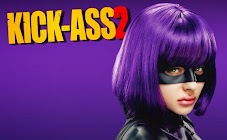
Kick-Ass 2 (4½ Stars)


How does the sequel compare with the original film?

Kick-Ass 2 is a sequel that tries to punch harder, shout louder and shock faster than the first film; the results are mixed but often fascinating. It retains the scrappy energy that made the original a cult favourite, yet it shifts the tone in ways that highlight both its ambition and its limits.

What is better

The sequel expands the world in a way that feels genuinely fun. The first film revolved mostly around Kick-Ass, Big Daddy and Hit Girl, but Kick-Ass 2 fills the city with amateur heroes whose costumes look like they were bought at a garage sale. This broader roster gives the film a looser, almost comic book sprawl. Justice Forever is packed with oddballs, and their presence adds texture that the first film never tried to offer.

Chloë Grace Moretz remains the standout. Her development is deeper here; Hit-Girl wrestles with adolescence, identity and the idea of normal life. The first film leaned heavily on the shock value of a small girl dropping bodies. The sequel gives her emotional stakes that feel credible. Her arc is the most grounded and the most compelling.

There is also a sharper focus on consequences. The violence still borders on cartoonish, yet the film at least acknowledges that vigilantism has fallout. That moral shading gives the sequel a slightly more mature edge.

What is worse

The tonal balance is far less steady. The first film had a cheeky sincerity that blended parody with heartfelt origin story. Kick-Ass 2 often stumbles between dark brutality and goofy slapstick. Scenes that aim for grim realism sit beside jokes that feel imported from a different movie. The lack of control makes the emotional beats less effective.

The villain upgrade does not fully land either. Christopher Mintz-Plasse throws himself into the role, yet the Motherfucker feels more like a running gag than a genuine threat. The film tries to push him toward menace but never quite finds the tone that would make him memorable.

The action is bigger but not always better. Some set pieces are entertaining, but the kinetic style of the first film is missing. Matthew Vaughn’s original direction had a clean rhythm. Jeff Wadlow goes for scale over precision.

Verdict

Kick-Ass 2 is rougher, broader and more uneven than the first film. It offers a richer world and a stronger emotional arc for Hit-Girl, yet it loses some of the tightness and tonal clarity that made the original work. It is a sequel with personality and moments of charm; it just punches in too many directions at once.

Success Rate:  + 0.2

Order from Amazon.com
Order from Amazon.co.uk
Order from Amazon.de

Saturday, 6 December 2025

Joker Folie à Deux (5 Stars)


Why it surpasses the first film

Joker (2019) was a character study built on grit, alienation and a slow descent into madness. Joker: Folie à Deux keeps that foundation yet pushes the concept into stranger bolder territory. This shift is exactly what makes it a stronger film. Where the first film offered a grim portrait of a man collapsing under the weight of society, the sequel becomes a fever dream shared between two unstable souls. It is more daring, more self aware and far more playful with the idea of cinematic reality.

The most obvious difference is the musical structure. Instead of repeating the grounded aesthetic of the first film, Folie à Deux uses musical sequences as windows into Arthur and Harley’s shared delusion. These scenes are not simple gimmicks; they become expressions of their mental state. The first film showed Arthur imagining an audience that never applauded him; the sequel lets him build entire worlds in song. The musical moments allow the film to explore fantasy, desire and dependency in ways the original could not. This added layer of surrealism gives the sequel more emotional range.

The chemistry between Joaquin Phoenix and Lady Gaga also strengthens the narrative. Phoenix retains his uneasy unpredictability, yet Gaga brings a chaotic vulnerability that reshapes Arthur’s story. She does not imitate past versions of Harley; she invents her own that fits this universe. The dynamic between them has more energy than anything in the first film. It creates tension, tenderness and danger. Their relationship becomes the engine of the plot rather than a simple consequence of Arthur’s actions.

The sequel also feels less burdened by the need to justify itself as a “serious” comic book movie. It allows moments of humour to seep through, then happily undercuts them with dread. The result is more confident and more artistically free. Where the first film sometimes felt restrained by its insistence on realism, Folie à Deux embraces the subjective chaos of its characters. The film shifts tone with purpose; suddenly a scene is menacing, then it becomes operatic, then intimate. This variety makes it richer and more memorable.

Visually the sequel is more expressive. The colour palette is bolder and the cinematography leans into the idea of unreliable perception. Gotham still feels oppressive, yet it also becomes theatrical, almost like a stage for Arthur and Harley’s fantasies. This blend of harshness and fantasy gives the film an identity distinctly separate from the first.

Most importantly the sequel expands the themes. Instead of focusing mainly on systemic neglect it explores shared delusion, co-dependency and the longing to be seen. Arthur’s story becomes larger than a lonely man’s breakdown; it becomes an unsettling duet about two people who find comfort in each other’s madness. It is disturbing, sometimes touching and always compelling.

Joker: Folie à Deux improves on the first film by refusing to repeat it. It is weirder, more emotional and more ambitious. Instead of explaining Arthur Fleck it lets us get lost in the world he creates with Harley. In doing so it becomes a sequel that dares to be different and ends up being more satisfying.

Success Rate:  - 0.9

Order from Amazon.com
Order from Amazon.co.uk
Order from Amazon.de

Friday, 5 December 2025

New Fist Of Fury (4 Stars)


New Fist of Fury as Bruceploitation

New Fist of Fury arrived in 1976 as one of the earliest attempts to reshape Jackie Chan into the next Bruce Lee. The film is a curious mix of martial arts melodrama and industry calculation; it sits at the intersection of tribute and imitation, and it shows how the Hong Kong studios tried to fill the void left by Lee’s sudden death. In retrospect this phenomenon has been called Brucesploitation.

This refers to the wave of films made after Bruce Lee died in 1973. These films used actors who resembled him, behaved like him and fought like him; they were sometimes given names designed to trick audiences. Posters featured lookalike poses, yellow tracksuits and snarling facial expressions. Many films claimed to continue Lee’s legacy, or pretended to reveal secret chapters of his life. The goal was simple: ride the momentum of a superstar whose fame had grown even larger after his passing.

Brucesploitation could be cheap and cynical, but it was also a revealing snapshot of a film industry that had lost its brightest star and had no clear idea how to replace him.

How New Fist of Fury uses Jackie Chan in this framework

Golden Harvest had not yet found the comic persona that made Jackie Chan famous. In New Fist of Fury, the studio tried to shape him into a tough, brooding successor to Bruce Lee. The original Fist of Fury had made Lee a household name, so reviving that title was the clearest signal possible.

Chan’s performance fits the bruceploitation mould in several ways:

1. The grim persona

Chan is asked to suppress his natural charm. He scowls, postures, and delivers his lines with forced intensity. This mimics the stoic fury that defined Lee’s screen presence, although it never feels natural for Chan.

2. The righteous avenger template

Chan plays a street thief who becomes a disciplined martial artist. The journey mirrors the narrative arc that bruceploitation films loved; a downtrodden hero discovers inner strength, then retaliates with righteous force against oppressors.

3. The choreographic echoes

While Chan had not yet developed his playful, acrobatic style, the fights push him toward Lee’s sharp explosive movements. His screams copy Lee’s distinctive kiai patterns, and several shots linger on his face as if trying to capture the same raw intensity that Lee had carried effortlessly.

4. The legacy branding

The film uses the Fist of Fury title to wrap itself in Lee’s aura. Chan is not playing Bruce Lee, but the narrative positions him as a symbolic heir who must restore pride to the oppressed Chinese fighters. This is classic bruceploitation; a new protagonist inherits Lee’s mission and fights in his spirit.

How well it works

The film is historically interesting but dramatically uneven. Chan is earnest, but he feels misplaced. He fights well, but without the self-aware sparkle that later made him unique. Instead of showcasing his gifts, the film tries to hammer him into a mould that never fits.
The production has some strong choreography and a sincere sense of national struggle. However, the pacing is uneven and the dramatic scenes are heavy. The attempt to recreate the tone of the original Fist of Fury gives the film a stiff solemnity that contrasts with Chan’s natural energy.

Final thoughts

New Fist of Fury is a transitional film. It shows a studio searching for another Bruce Lee, and an actor waiting to become Jackie Chan. As bruceploitation, it is a clear example of how the industry tried to borrow Lee’s power rather than build something new. Today, it is most interesting as a record of what Chan was never meant to be, and as an early chapter in the long period before he found his true screen identity.

Order from Amazon.com
Order from Amazon.co.uk